How to Spot Fake Dating Profiles: 7 Scammer Warning Signs 2026

Reading time: 8 minutes
Spotting fake profiles is becoming a key skill in online dating: in Germany alone, the Federal Criminal Police Office (BKA) registered over 23,000 cases of romance scamming in 2024, with an average loss of €15,700 per victim. Online dating scammers are getting more professional, but with the right warning signs you can protect yourself effectively. Here you'll learn exactly which signs point to fake profiles and how to protect yourself from romance scammers.
Most fraud cases follow similar patterns. Anyone who knows them can protect themselves in time and tell real contacts from fake profiles. The safety of dating platforms depends not only on the operators but also on your vigilance.
1. Professional model photos instead of authentic everyday pictures
Spotting fake profiles often starts with the profile picture. Scammers deliberately use professional photos of models or stolen pictures of real people. A typical warning sign: the person looks like they came out of a glossy magazine, while real users usually use everyday selfies or vacation photos.
Test suspicious pictures with Google image search. Download the profile picture, go to images.google.com and click the camera icon to upload the image. If identical images show up on stock photo sites or in other contexts, the profile is very likely fake.
On platforms like Parship or ElitePartner, profiles with only a single picture are statistically contacted less often. Real users usually upload 3 to 5 photos showing different situations. With fake profiles you often find only 1 or 2 perfectly staged pictures with no recognizable personal connection.
2. Vague profile details without local specifics
Online dating scammers avoid concrete details that could be verified. Instead of "engineer at Boeing in Seattle" you read "work in the technical field" or "self-employed, working internationally." The profile description stays vague and could apply to anyone.
Watch for missing local references. Someone who supposedly lives in Chicago but doesn't know any neighborhood names or never mentions specific places should make you suspicious. Romance scammers often list big cities as their home but know nothing about the local area.
Another warning sign is contradictory details. The profile lists Denver as the place of residence, but the person casually mentions currently working in Dubai. Inconsistencies like these point to fake profiles where scammers tell several stories in parallel.
3. Rushed declarations of love in the first messages
Love bombing is a classic ploy in romance scamming. After just 2 or 3 messages the person raves about your special connection, calls you a "soulmate" or writes long texts about future plans together. Real people need time to build trust.
According to a University of Leicester study, authentic online relationships take an average of 3 to 4 weeks of intensive communication before deeper feelings come up. Scammers shorten this period to a few days in order to create emotional dependency.
You should also get suspicious if someone barely answers your messages and instead sends pre-written blocks of text. Copy suspicious sentences into Google. If you find identical wording in scam warnings, you're communicating with a scammer.
4. Excuses for avoiding video calls and in-person meetings
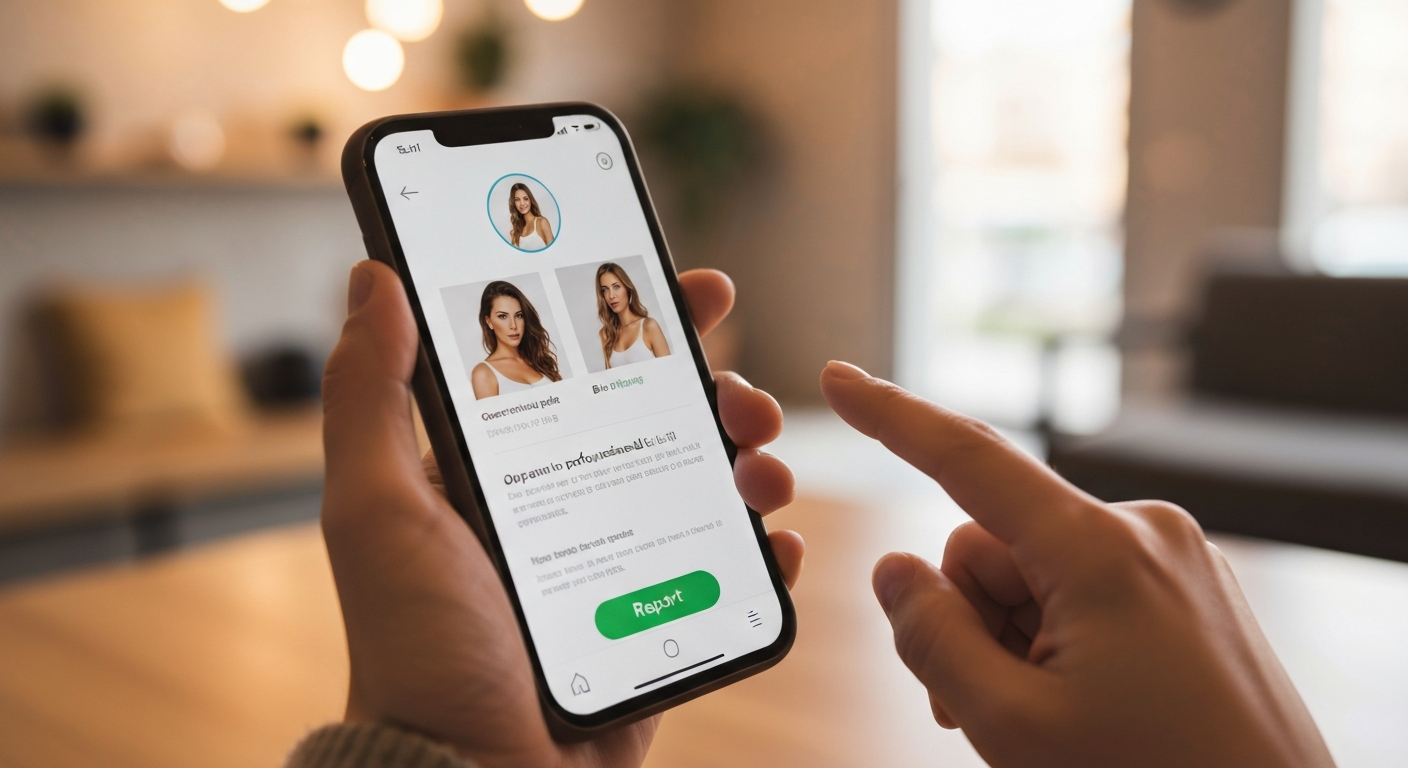
Spotting fake profiles gets easier when you ask for a video call. Scammers always have reasons why a video call isn't possible: the camera is broken, the internet connection is too poor, or they work on an oil rig with no video capability. After the third excuse, your alarm bells should ring.
On dating platforms like Bumble or Tinder you can now start video calls directly. If someone persistently refuses to use this feature, they're probably hiding their true identity. Real prospects agree to a short video chat after a few days at the latest.
There are always dramatic obstacles to in-person meetings too: sudden business trips, sick relatives or frozen accounts. A concrete test: suggest a public place in your city and watch the reaction. Scammers will dodge, while real matches are often relieved by the suggestion.
5. Requests for money or financial support
The clearest warning sign for romance scammers is the money question. Typical scenarios: the person needs money for a plane ticket to visit you, has medical emergencies or problems with international transfers. According to Europol, 89 percent of all romance scam cases begin with emergency stories like these.
Online dating scammers first build trust over weeks before asking for money. The amounts often start small, $50 or $100 for supposedly urgent expenses. Once you pay, you're systematically asked for larger sums.
Indirect money requests are warning signs too: the person asks for gift card codes, access to your Amazon account or wants packages shipped to your address. Behind this are often money laundering attempts or fraud with stolen credit cards. Refuse any financial entanglement with online contacts.
Typical scams at a glance
- Military personnel deployed overseas who need help with a money transfer
- Business people with frozen accounts after supposed projects in Africa or Asia
- Doctors or engineers at NGOs working in crisis zones with no access to banks
- Widows or widowers with children who suddenly have medical emergencies
- Investment advisors who promise you lucrative cryptocurrency deals
6. Odd grammar and generic messages
Many scammers are based in West Africa, Eastern Europe or Southeast Asia and use translation tools. The result is clunky sentences, wrong articles or unnatural phrasing. A native English speaker wouldn't write: "I have develop very strong feelings to you."
Also watch for a lack of personal references in the messages. Does the person ask you lots of questions but systematically ignore your questions back? Scammers often work from scripts and can't respond flexibly to individual conversation topics.
A practical test for fake profiles: casually mention an invented detail, such as "yesterday at the XYZ concert in the city park." Real matches will ask follow-up questions or correct you if there was no such concert. Scammers usually overlook details like that and reply with generic phrases.
7. Pressure to communicate outside the dating platform

Dating platform safety includes monitoring systems that detect suspicious messages. That's why scammers quickly push you to switch to WhatsApp, Telegram or a private email address. The reason sounds plausible: "I'm not online here that often" or "Can we chat on WhatsApp instead?"
Reputable platforms like Parship or LoveScout24 actively warn against switching platforms too quickly. Stay on the dating platform for at least 1 to 2 weeks to observe your match's behavior. Real prospects have no problem communicating there.
It gets especially suspicious when the person gives a foreign phone number that doesn't fit the stated place of residence. Someone who supposedly lives in New York but has a Nigerian or Philippine country code is very likely lying about their true identity.
How to actively protect yourself from fraud
Besides spotting fake profiles, preventive behavior helps. Never share personal documents like ID copies or credit card details. Legitimate matches will never ask for them. You should also hold off on private information like your exact address or employer details until after several in-person meetings.
Actively use the safety features of your dating platform. Most apps offer report functions for suspicious profiles. Your report doesn't just help you, it also protects other users from romance scammers.
Research names and details in search engines. Copy distinctive passages from messages into Google, because many scammers use the same wording on multiple victims. Forums like www.scambaiter.info or www.romancescam.com document known fraud cases with names, photos and stories.
What to do if you've already become a victim?
If you've already transferred money, file a police report immediately and contact your bank. Transfers abroad can rarely be recovered, but a report helps with investigations against organized gangs. In Germany, the Federal Criminal Police Office (BKA) runs a counseling service for fraud victims at www.bka.de.
Document all messages, photos and transaction receipts. Screenshots help with providing evidence. Also tell the dating platform about the fraudulent profile so others are protected.
Don't hesitate to seek professional help. In Germany, the victim support organization Weisser Ring (www.weisser-ring.de) offers free victim counseling for online fraud as well. Romance scamming leaves not only financial but also emotional damage.
Frequently asked questions about fake profiles
What's the fastest way to spot fake profiles in online dating?
The fastest method is a Google image search with the profile picture. Download the photo and search for it on images.google.com. If you find identical pictures on stock photo sites or other dating profiles, the profile is very likely fake. You should also watch for vague profile details and missing local specifics.
Why do romance scammers always refuse video calls?
Scammers use stolen photos of real people and therefore can't communicate by video. They keep inventing new excuses like broken cameras, bad internet or work restrictions. After the third excuse for a missing video call, you should cut off contact and report the profile.
How soon do fake profiles start asking for money?
Most romance scammers build trust for 2 to 6 weeks before asking for money. They create emotional dependency through intensive communication and declarations of love. The first money requests often come disguised as emergencies: medical problems, frozen accounts or travel costs to visit you.
Are free dating sites more prone to fake profiles?
Yes, free dating sites statistically have more fake profiles because scammers don't have to provide payment details. Paid platforms like Parship or ElitePartner have stricter verification processes. Even so, fake profiles turn up on all platforms, and your vigilance remains the most important protection.
What happens if I've fallen for a fake profile?
Cut off all contact immediately and file a police report, especially if you've transferred money. Inform your bank and the dating platform. Document all messages and transactions. In Germany, the Federal Criminal Police Office and Weisser Ring offer free counseling for fraud victims. Don't be ashamed, since romance scammers are professional criminals.
Conclusion: vigilance protects you from romance scammers
Spotting fake profiles isn't witchcraft once you know the seven warning signs: professional model photos, vague profile details, rushed declarations of love, excuses about video calls, demands for money, odd grammar and pressure to switch platforms. Each individual sign should make you skeptical, and if several apply, you're very likely dealing with an online dating scammer.
The safety of dating platforms starts with you. Use Google image search, insist on video calls after two weeks at the latest and never share money or personal documents. Reputable platforms offer report functions, so use them actively to protect other singles.
Don't get discouraged: the vast majority of profiles on established platforms are real. With common sense and these concrete warning signs, you'll find authentic connections. Also read up on successful conversation starters once you're sure you're communicating with real people. Your vigilance is the best protection against romance scammers, so use it consistently for a safe online dating experience.